






















Hydrotherapy after surgery: when water helps you trust movement again
After surgery, movement can feel unfamiliar.
A knee that used to bend without a second thought suddenly needs concentration. Standing up takes planning. A short walk can feel like a test. Even when recovery is progressing well, there is often a period when the body is capable of moving, but the mind remains cautious.
This is where hydrotherapy can have a valuable role.
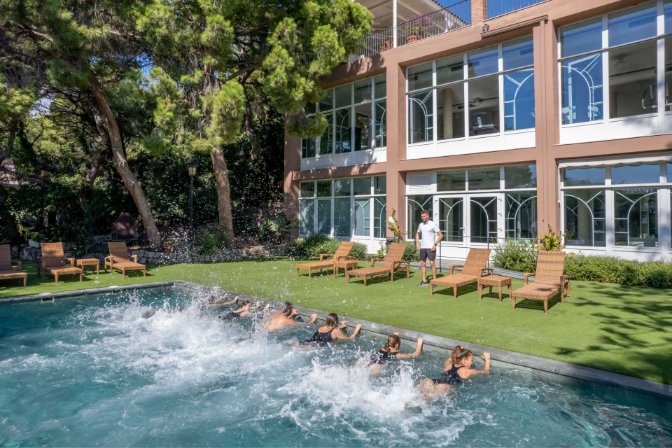
In a warm hydrotherapy pool, the body is partially supported by the water. There is less load through the joints, movement slows down and resistance feels gradual. For someone recovering from an operation, that can create an environment where moving feels more manageable.
Hydrotherapy does not replace physiotherapy or determine how quickly someone will recover. It gives the body another setting in which to practise movement, regain strength and, little by little, feel more confident again.
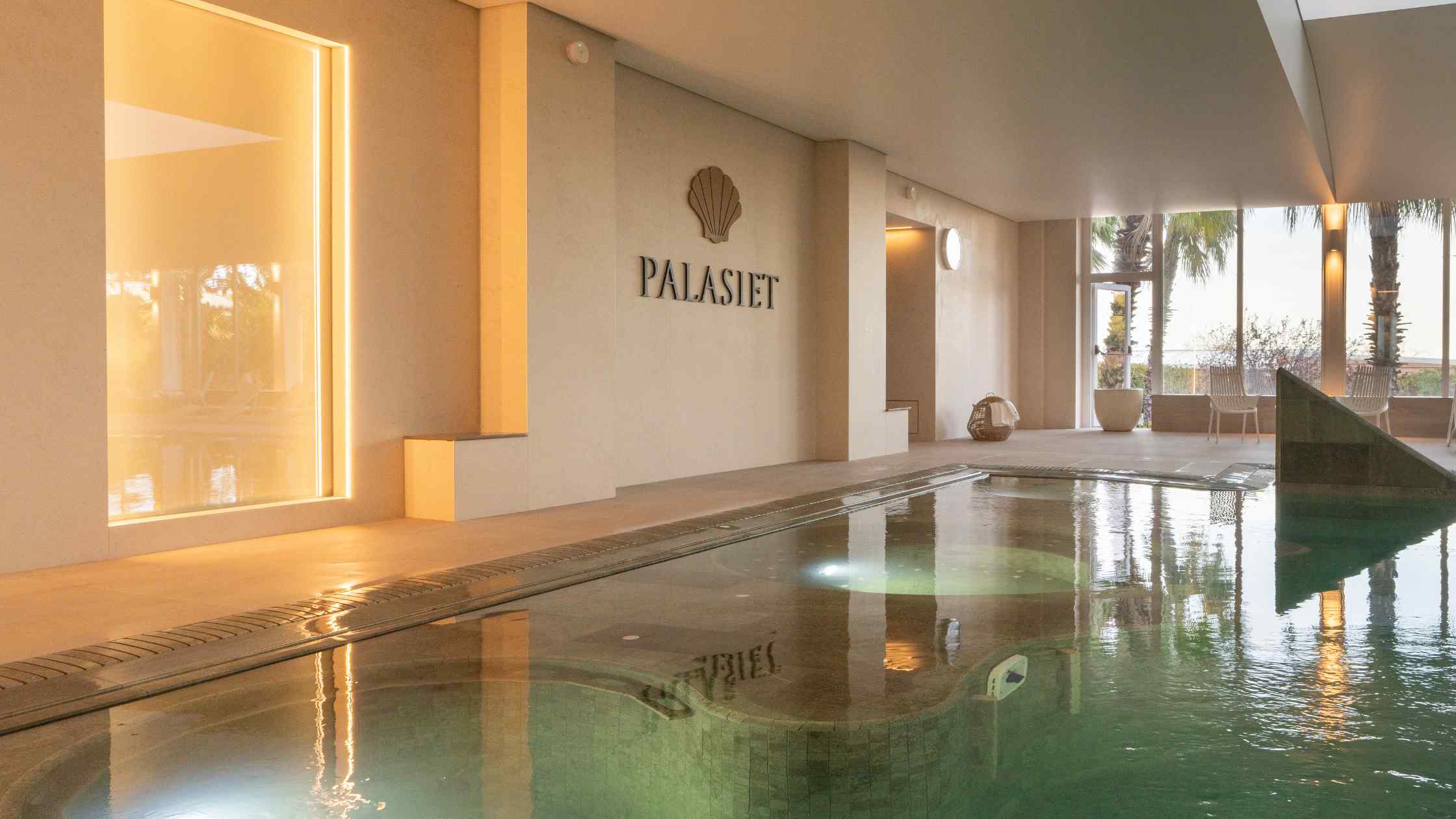
At Palasiet, this relationship between water, movement and recovery has been part of our understanding of health for decades. Rehabilitation is never reduced to a single exercise or treatment. How we move, rest, eat and feel all have a place in the recovery process.

What is hydrotherapy after surgery?
Hydrotherapy is therapeutic exercise carried out in water, usually in a specially designed warm pool.
In the UK clinical setting, you may also come across the term aquatic physiotherapy. The Aquatic Therapy Association of Chartered Physiotherapists, a professional network recognised by the Chartered Society of Physiotherapy, defines it as a physiotherapy programme that uses the properties of water and is designed around the individual by a suitably qualified physiotherapist.
That distinction matters.
A hydrotherapy pool is not simply somewhere to swim. The water is generally warmer than in a conventional pool, access may be adapted for people with limited mobility, and movements are chosen according to the person’s physical condition, medical history and stage of rehabilitation.
After surgery, the exercises themselves may look quite simple. Walking through the water, bending and straightening a joint, shifting weight or working against the resistance of the water can all become useful ways of restoring movement gradually.
The right exercise at the right moment matters far more than doing a large amount of exercise.
Why does movement feel different in a hydrotherapy pool?
Anyone who has stood in a swimming pool knows that the body feels lighter in water. In rehabilitation, that familiar sensation becomes useful.
Buoyancy reduces the load on the body
Water supports part of your body weight.
As a result, joints and muscles do not experience quite the same load they would on land. After surgery, that can make some movements easier to attempt, particularly when putting full weight through a joint still feels difficult or uncomfortable.
A step in the pool is still a step. The muscles are working. The difference is that the water is helping to support the body while they do it.
For someone recovering from knee or hip surgery, this may make walking practice feel less daunting. There is more opportunity to pay attention to how the body is moving rather than focusing entirely on discomfort or the fear of doing something wrong.
Warm water can make movement more comfortable
Hydrotherapy pools are usually warmer than standard swimming pools.
That warmth can help muscles relax and may make gentle movement feel more comfortable, especially when stiffness has become part of the recovery process.
It does not mean that warm water heals the surgical site or removes pain. What it can offer is a pleasant, controlled environment in which movement may feel easier to explore.
Sometimes that is enough to make the first few movements less guarded.
Water provides resistance without weights
Water resists movement in every direction.
Move your leg forwards and you feel the resistance. Change direction and the water responds again.
This allows muscles to work without immediately relying on gym equipment or heavy external loads. The effort can also be adjusted quite naturally. A slow movement requires less force, while increasing the speed or range of movement makes the exercise more demanding.
For rehabilitation, that gives the therapist room to progress an exercise gently as strength returns.
The pool gives you more time to work on balance
Movement in water tends to be slower.
That can be reassuring after surgery, particularly when balance has changed or someone has become nervous about falling.
The water does not remove the need to control the body. It gives the body more time to respond.
Standing, shifting weight and taking a few controlled steps can feel very different when there is water around you.
What can hydrotherapy help with after surgery?
The reason for using hydrotherapy will vary from one person to another. An exercise that is useful after a knee replacement may have little relevance after another type of operation.
This is why rehabilitation in water should be built around the person, rather than around a standard pool routine.
Regaining range of movement
After surgery, joints can feel stiff and protective.
Some people find that the support of the water allows them to begin bending, straightening or moving a joint more comfortably.
There is no need to force the movement. Progress may be a matter of a few degrees at first.
Those small changes can have a surprisingly practical effect. Sitting down becomes easier. A step feels less awkward. Getting into a car requires less thought.
Rebuilding strength
Muscles lose strength during periods of pain, reduced mobility and rest.
The resistance of the water provides a way of making those muscles work again while the body remains supported.
As recovery progresses, exercises can become more demanding. Eventually, the strength being developed in the pool needs to transfer into walking, climbing stairs, standing up and all the other movements that happen on land.
Practising walking
Walking after surgery is rarely just about putting one foot in front of the other.
Someone may need to learn to distribute their weight evenly again, straighten a knee properly or stop protecting one side of the body.
Water can offer a useful place to practise those patterns.
There is time to notice how a step feels and how the body responds.
Improving balance and coordination
Balance can change temporarily after an operation, particularly after a period using crutches or walking less than usual.
Exercises in water can introduce controlled changes of direction, weight transfer and balance tasks under supervision.
The water provides constant physical feedback. Lean slightly and you feel it. Push harder on one side and you notice the change.
That awareness can be useful when normal movement still feels unfamiliar.
Recovering confidence in your body
This is one of the parts of rehabilitation that rarely shows up on a scan or test.
A person can be medically ready to move and still feel apprehensive about doing it.
After weeks of protecting a painful joint or limiting activity, caution can become almost automatic. The pool may offer a useful intermediate environment where movement feels safer to explore.
The first goal might be very modest. Perhaps bending a knee without tensing beforehand. Perhaps taking several steps without watching every footfall.
Those moments matter.
Maintaining strength, mobility and confidence in movement also matters well beyond a period of post-surgical rehabilitation. We explore that relationship more widely in our article on active ageing and lifelong mobility.
Which operations can hydrotherapy be used after?
Hydrotherapy is often considered in orthopaedic rehabilitation, although suitability depends on the person and the procedure.
It may form part of recovery following knee replacement, hip replacement, ligament surgery and some other musculoskeletal procedures. It can also be considered in selected rehabilitation programmes following spinal or injury-related surgery.
There is no standard post-operative hydrotherapy programme that works for everyone.
The operation matters. So does wound healing, overall health, current mobility, weight-bearing restrictions and the advice of the surgical and physiotherapy teams.
Professional assessment before entering a hydrotherapy pool after surgery is therefore essential.
When can you start hydrotherapy after surgery?
There is no universal number of days or weeks.
The right time depends on the operation, the condition of the wound, individual health and the instructions given by the surgical team.
The NHS guidance on recovery after surgery advises keeping a surgical wound out of baths and swimming pools until it has completely healed, unless a doctor has confirmed that it is safe to do otherwise.
That makes wound healing one of the basic considerations before hydrotherapy begins.
Two people can undergo a similar operation and still have very different recovery timelines. One may be ready to begin pool-based rehabilitation earlier, while another needs more time because of wound healing, complications or other medical considerations.
It makes more sense to think about readiness than to rely on a fixed date.
What happens during a post-surgical hydrotherapy session?
A useful hydrotherapy session starts before anyone gets into the water.
The therapist needs to understand what operation has taken place, what movements currently feel difficult, whether there are medical restrictions and what the wider rehabilitation plan is trying to achieve.
From there, the session can be shaped around the person.
Before entering the pool
Walking, strength, balance and range of movement may be assessed first.
The therapist will also review relevant medical restrictions and agree on practical goals.
One person may want to regain knee flexion. Another may be struggling to walk without favouring one side. Someone else may simply need to rebuild enough confidence to start moving more freely again.
These are different problems and they need different approaches.
Moving safely in the water
A therapeutic pool should allow people with reduced mobility to enter and leave safely.
Once in the water, the first movements tend to be gentle.
Walking, controlled joint movements, balance exercises and gradual strengthening may all be used, depending on the reason for treatment.
The session does not need to feel intense to be useful.
Progressing back to movement on land
The pool is one part of rehabilitation.
What eventually matters is being able to move confidently outside it.
Exercises can therefore progress in the water while physiotherapy and appropriate activity on land continue alongside them. Over time, walking, strength and functional movements should become increasingly relevant to everyday life.
Hydrotherapy or land-based physiotherapy?
They often belong in the same rehabilitation plan.
Water provides buoyancy, warmth and resistance. Rehabilitation on land allows strength and movement to be practised under the conditions we experience in everyday life.
Research does not suggest that hydrotherapy is universally better than conventional rehabilitation.
A 2026 systematic review and meta-analysis of hydrotherapy after knee arthroplasty found no statistically significant advantage over land-based exercise or usual care for post-operative pain. It did, however, find greater improvements in lower-limb muscle strength in the hydrotherapy groups. The authors also noted that the number of high-quality trials remains limited, so the results should be interpreted with appropriate caution.
That is a useful way to understand hydrotherapy.
Its value does not depend on being better than every other form of rehabilitation. For the right person, at the right stage, the water can make certain movements more accessible and provide another way to work towards the same functional goals.
Hydrotherapy after knee or hip replacement
Knee and hip replacements are two of the operations most often associated with hydrotherapy because rehabilitation involves recovering movement, strength and confidence in weight-bearing.
In the pool, walking can be practised with part of the body supported by the water. Hip or knee movements can also be introduced gradually, while water resistance provides a way of working the surrounding muscles.
For some people, this can provide a useful bridge between the earlier stages of recovery and more demanding exercise on land.
Current NICE guidance for hip and knee replacement rehabilitation recommends that recovery planning includes exercise, mobilisation and rehabilitation goals tailored to the person’s needs.
For those interested in exploring the therapeutic relationship between seawater, movement and wellbeing beyond a single rehabilitation technique, Palasiet’s thalassotherapy programme in Spain offers a wider approach centred on the marine environment, guided care and restorative wellbeing.
Hydrotherapy and thalassotherapy: what is the difference?
The words are sometimes used as though they mean the same thing, but they describe different approaches.
Hydrotherapy refers broadly to the therapeutic use of water. In rehabilitation, that may involve guided movement and exercise in a warm pool.
Thalassotherapy specifically uses seawater and other elements of the marine environment.
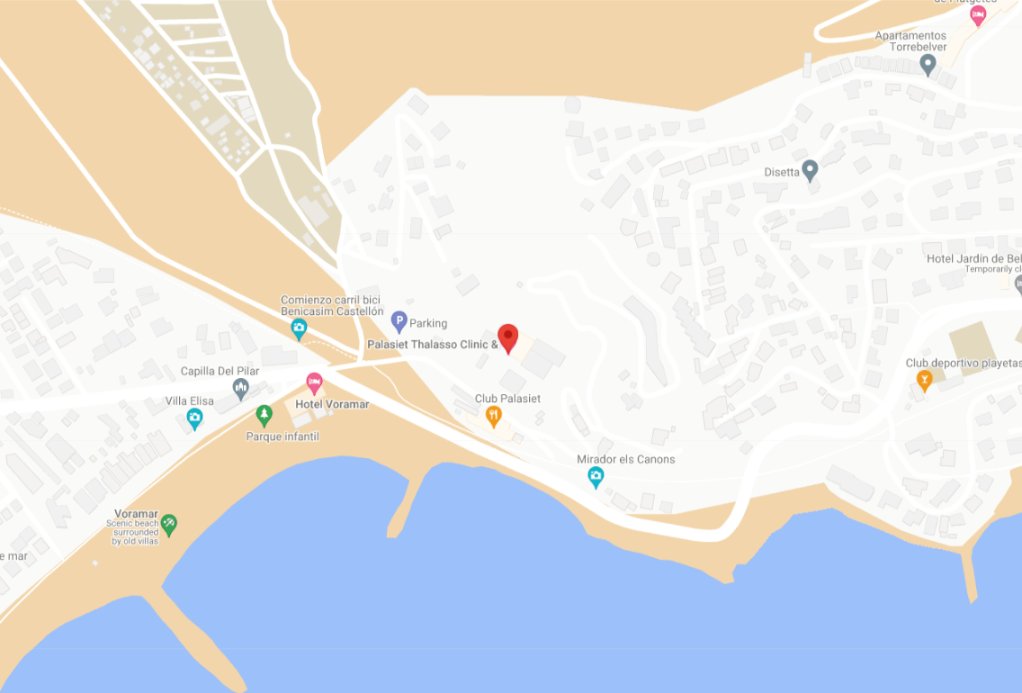
At Palasiet, the sea has been part of the health philosophy since the centre was founded in 1963. Mediterranean seawater is used throughout our thalassotherapy clinic, alongside physiotherapy, medical care, physical activity, nutrition and other areas of wellbeing.
In the context of surgical recovery, it is important to be precise about what this means.
Seawater should not be presented as something that makes a surgical wound heal faster. The relevance of water-based rehabilitation lies in how the aquatic environment can be used, once it is medically appropriate, to support movement and carefully planned exercise.
At Palasiet, that sits within a wider view of recovery.
A person’s mobility is connected to strength. Strength is affected by activity. Activity is influenced by confidence, nutrition, rest and overall health. Treating those elements as related rather than separate is part of the Palasiet approach.
What should you look for in a hydrotherapy pool?
Not every swimming pool is suitable for rehabilitation.
A hydrotherapy pool should provide an environment in which therapeutic movement can be carried out safely and comfortably.
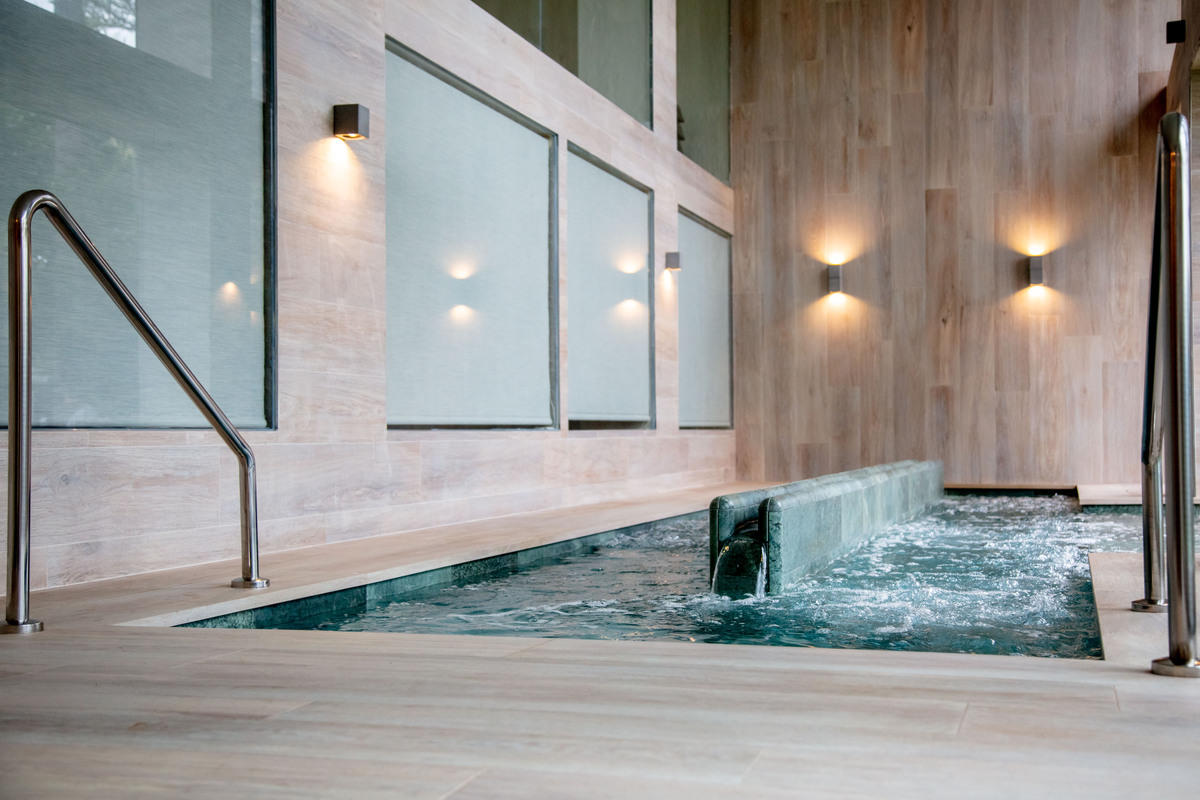
Water temperature is one consideration. Access is another, particularly for somebody with reduced mobility. Steps, handrails and the way a person enters and leaves the water can make a significant difference.
Professional supervision is just as important as the physical pool itself.
The most sophisticated hydrotherapy pool has limited value if the exercises are not suited to the person using it.
A rehabilitation professional should understand the operation, current restrictions and goals, and know how work in the water fits with progress on land.
Do you need to be able to swim to do hydrotherapy?
No.
Hydrotherapy is not a swimming lesson.
Many rehabilitation exercises are performed standing in water where the person can comfortably touch the floor.
What matters is being able to enter the pool safely and feel secure in the aquatic environment.
If someone is uncomfortable around water, it is worth discussing this before the first session. Feeling tense or unsafe is hardly a good starting point for learning to move with confidence.
Is hydrotherapy suitable for everyone?
No.
There are circumstances in which hydrotherapy may not be appropriate, either temporarily or at all. These can include unhealed wounds, active infections and certain medical conditions.
Suitability needs to be assessed individually.
Anyone recovering from an operation should follow the guidance of their surgeon and rehabilitation team before beginning hydrotherapy.
A gentler place to begin again
Recovery rarely arrives in one dramatic moment.
Usually, you notice it in smaller things.
The knee bends a little further than it did last week. Standing up feels less deliberate. You take a few steps and realise afterwards that you were not thinking about every one of them.
Hydrotherapy can support some of those moments.
The water cannot do the rehabilitation for you, but it can change the conditions in which movement takes place. The body feels supported. Movements can be slowed down. Muscles have resistance to work against without immediately carrying the same load they would on land.
Perhaps most importantly, it can provide somewhere to begin moving without feeling that every movement is a test.
At Palasiet, recovery is understood in that wider sense. Restoring a joint or muscle to function matters, but so does helping the person return to everyday life with confidence, independence and a better relationship with their own body.
Sometimes water gives that process a gentler place to start.
Frequently asked questions about hydrotherapy
What is hydrotherapy?
Hydrotherapy is the therapeutic use of water. In rehabilitation, it usually involves guided exercises in a warm hydrotherapy pool to work on areas such as mobility, strength, balance and functional movement.
What is a hydrotherapy pool?
A hydrotherapy pool is a warm pool designed for therapeutic exercise and rehabilitation. It is generally warmer than a conventional swimming pool and may include features that make access easier for people with reduced mobility.
How does hydrotherapy help after surgery?
The buoyancy of water reduces the load the body has to carry while still allowing muscles to work. For some people, this makes walking, joint movement, balance and strengthening exercises more manageable during certain stages of recovery.
When can I start hydrotherapy after surgery?
There is no fixed timetable. The wound needs to have healed sufficiently for immersion and the medical or rehabilitation team should confirm that pool-based exercise is safe. Timing depends on the operation and the individual.
Is hydrotherapy good after knee replacement?
Hydrotherapy may form part of rehabilitation after knee replacement. It can provide an environment for practising walking, joint movement and strengthening with reduced weight-bearing. Its suitability and timing should be agreed with the healthcare professionals overseeing recovery.
Is hydrotherapy good after hip replacement?
It may be useful for some people following hip replacement, particularly for controlled walking and strengthening exercises. The programme still needs to respect the specific precautions and rehabilitation goals established after surgery.
Is hydrotherapy better than physiotherapy?
Hydrotherapy is often used as part of physiotherapy rather than as an alternative to it. Pool-based and land-based rehabilitation can complement one another, depending on the person’s needs and stage of recovery.
What is the difference between hydrotherapy and thalassotherapy?
Hydrotherapy is the therapeutic use of water, including water-based rehabilitation. Thalassotherapy specifically uses seawater and elements of the marine environment. At Palasiet, thalassotherapy forms part of a broader approach that also includes medical care, physical activity, nutrition and emotional wellbeing.