
























Women’s hormonal health and chronic stress
There comes a point when stress no longer feels like something happening around you. It begins to settle into the body.
You may notice it in the way you sleep, the energy you wake up with or the patience you have left at the end of the day. Your period may arrive later than usual. Premenstrual symptoms may feel harder to manage. During perimenopause, interrupted nights and emotional changes can amplify pressures that were already there.

Perhaps the clearest sign is a feeling that many women struggle to put into words: you no longer feel quite like yourself.
These experiences are real, but they do not always have a single explanation. Women’s hormonal health is influenced by age, sleep, nutrition, physical health, emotional strain and the different stages of reproductive life.
Chronic stress can be part of that picture. It is rarely the whole picture.
Understanding that distinction helps us listen to the body without fearing every symptom. It also allows us to recognise when rest and lifestyle support may help, and when professional assessment is needed.
When stress begins to feel physical
Stress is a natural response to pressure, uncertainty or perceived danger. In the right moment, it helps us react quickly. It sharpens our attention, increases our heart rate and prepares the body to act.
When we feel anxious or afraid, the body releases hormones such as adrenaline and cortisol. This response can be helpful for a short period. The difficulty begins when the pressure rarely eases and the body has too few opportunities to recover.
The source of that pressure is not always dramatic.
It may be a demanding job, months of broken sleep or the invisible responsibility of caring for other people. It can come from relationship difficulties, grief, financial uncertainty or a period of significant change.
Physical pressure matters too. Illness, excessive exercise, inadequate nutrition and long-term sleep deprivation can all place additional demands on the body. Periods of insufficient recovery may also coexist with oxidative stress and its symptoms, although the two terms should not be used as though they describe the same process.
Often, several of these things are happening at once. The body is not responding to one difficult day, but to the accumulation of many days without enough recovery.
How stress and hormones influence each other
Hormones do not work in isolation. They belong to a complex communication system involving the brain, adrenal glands, ovaries, thyroid and other tissues throughout the body.
This does not mean that every difficult week creates a hormonal disorder. It means that prolonged stress can influence some of the same systems involved in sleep, appetite, menstrual function, mood and energy.
At the same time, hormonal changes can alter how stress is experienced. A night of poor sleep may make the following day feel more demanding. A difficult premenstrual phase may reduce emotional resilience. During perimenopause, night sweats, anxiety or brain fog can add another layer of difficulty to an already full life.
This is how a cycle can develop. Stress affects the way you feel physically and emotionally, and those symptoms make everyday pressure harder to carry.
The body’s natural alarm system
Cortisol is often described simply as the “stress hormone”, but it is not harmful by nature. It plays an essential role in normal body function.
The stress response itself is not the enemy. It is better understood as an internal alarm system, designed to sound when something needs our attention and to quieten once the immediate demand has passed.
Problems may arise when the alarm is activated repeatedly and the body has little chance to return to a calmer state.
You may feel exhausted, yet unable to switch off. Your body is tired, but your thoughts continue moving. Rest is needed, although rest itself no longer comes easily.
This is not something that can usually be solved by simply telling yourself to relax.
The body may need repeated signs of safety: adequate food, restorative sleep, appropriate movement, emotional support and moments in which nothing is being demanded of you.
The menstrual cycle and prolonged pressure
A period that arrives late once is not necessarily a cause for concern. Menstrual cycles naturally vary, and temporary changes can happen.
However, stress and anxiety are among the possible causes of irregular periods. Pregnancy, contraception, changes in weight, excessive exercise, thyroid conditions, polycystic ovary syndrome and the approach to menopause can also affect the menstrual cycle.
This is why it is unhelpful to assume that every change is “just stress”.
A menstrual change is information, not a diagnosis. If your usual pattern changes and remains different, it deserves attention.
Prolonged pressure may also make premenstrual days feel more difficult. Tiredness, headaches, poor concentration, irritability and changes in appetite can be harder to manage when emotional resources are already stretched.
The answer is not always to become more disciplined. Sometimes, it is to understand what else the body may be carrying.
Perimenopause, sleep and emotional strain
Perimenopause can arrive at a stage of life when many women are already managing considerable responsibility.
Work may be demanding. Parents may need more support. Children may still depend on you. Relationships, identity and physical health may all be changing at the same time.
Hormonal changes during perimenopause and menopause may be associated with irregular periods, hot flushes, night sweats, sleep problems, anxiety, mood changes, reduced libido and difficulty with memory or concentration.
Not every woman experiences every symptom, and their intensity can vary greatly.
Sleep is often central to the experience.
When night sweats or repeated waking interrupt rest, the following day may bring greater irritability, anxiety and mental fatigue. Ordinary tasks begin to feel heavier. Decisions require more effort. Patience becomes harder to find.
It can become difficult to know where hormonal change ends and stress begins. In reality, they may be influencing each other.
Signs that your body may need support
Stress does not look the same in every woman. Sometimes it is obvious. At other times, it appears through small changes that gradually become part of everyday life.
You may notice:
- Difficulty falling asleep or waking during the night
- Feeling tired but unable to quieten your thoughts
- A change in the timing or flow of your periods
- More noticeable premenstrual symptoms
- Lower libido
- Headaches or persistent muscular tension
- Changes in appetite or digestion
- Feeling unusually irritable, anxious or tearful
- Difficulty concentrating
- A sense that ordinary tasks require more effort
None of these symptoms proves that you have a hormonal imbalance. They are shared by many different physical and emotional conditions.
They are not proof, but they are worth listening to.
Why symptoms are not a diagnosis
The phrase “hormonal imbalance” is used frequently online, often as an explanation for almost any change in mood, weight, sleep or energy.
In clinical practice, it is too broad to be a diagnosis on its own.
Tiredness may be associated with poor sleep, iron deficiency, thyroid problems, depression, anxiety, medication, nutritional deficiencies or a demanding period of life.
Changes in periods may be related to pregnancy, contraception, PCOS, perimenopause or other gynaecological conditions.
Even symptoms commonly described online as signs of “high cortisol” are not specific enough to confirm that cortisol levels are abnormal.
The same caution applies to “adrenal fatigue”. Although the expression is widely used in wellness content, it is not recognised as a medical condition by major endocrinology organisations.
You deserve an explanation based on your health, your history and your circumstances, not a diagnosis built around a vague list of symptoms.
A gentler way to break the cycle
When life already feels demanding, wellbeing advice can become another source of pressure.
A perfect morning routine, a restrictive diet and a long list of supplements are unlikely to bring peace to someone who is already overwhelmed.
The aim is not to manage the body more aggressively. It is to create better conditions for recovery.
Small changes, repeated consistently, often have more value than a dramatic reset that cannot be sustained.
Protect the rhythm of your sleep
Sleep cannot always be controlled, especially during perimenopause or periods of intense pressure. It can, however, be supported.
Try to create a clear transition between the demands of the day and the beginning of rest. That might mean dimming the lights, leaving your phone outside the bedroom, reading quietly or taking a warm shower.
A broadly consistent time for going to bed and waking can help the body recognise when the day is beginning and ending.
If night sweats are disturbing your sleep, keep the bedroom comfortably cool and choose breathable bedding. You may also find it useful to notice whether caffeine later in the day or alcohol in the evening affects the quality of your rest.
Persistent insomnia is not something you simply have to endure. Professional support, including cognitive behavioural therapy in appropriate cases, can help.
Rest should not be treated as a reward for reaching the end of your responsibilities. It is one of the conditions that allows you to meet them.
Eat regularly, without chasing perfection
Food should not become another test you feel you are failing.
During demanding periods, regular nourishment can be more helpful than pursuing an idealised hormone diet. Long gaps between meals may leave some people feeling more tired, irritable or preoccupied with food.
Build meals around simple, satisfying ingredients. Vegetables, fruit, pulses, whole grains, good-quality protein, olive oil, nuts and fish can form part of a varied Mediterranean-style way of eating.
There is room for enjoyment too.
At Palasiet, we do not view healthy nutrition as punishment or deprivation. Eating well should support energy, pleasure and long-term wellbeing.
The plan should adapt to the person, not ask the person to adapt to a rigid plan.
Move in ways that restore you
Movement can help us feel more present in the body, but more is not always better.
If you are sleeping poorly, feeling depleted or recovering from illness, intense training may add to the strain. On those days, a walk, gentle mobility work or time in the water may be more appropriate than pushing through another demanding session.
A considered approach to active recovery can help maintain movement without asking an already tired body to work beyond its present capacity.
On stronger days, resistance exercise can support physical confidence, mobility and healthy ageing.
The right form of movement is not necessarily the one that leaves you most exhausted. It is the one that meets your body where it is and allows you to remain consistent.
Movement can challenge the body, but it should not punish it.
Let the nervous system settle
Not every source of stress can be removed.
You may not be able to change your responsibilities immediately. You may still have a family to care for, decisions to make or a difficult situation to navigate.
What can sometimes change is the number of moments in which the body is allowed to come down from a state of alert.
That might mean five slow breaths before entering the house, ten quiet minutes outside or a walk without listening to anything. It may be time near the sea, a conversation with someone who does not need anything from you or an evening in which productivity is no longer the priority.
These moments can look insignificant from the outside.
To a body that has spent the day responding to demands, they are not insignificant at all.
Share the weight you are carrying
Stress is often treated as an individual problem, even when its causes are shared.
Women frequently carry practical and emotional work that remains unseen. Remembering appointments, anticipating other people’s needs and keeping family life moving can be exhausting, even when no single task appears overwhelming.
For someone who has reached a point of deep physical and emotional depletion, learning how to recover from burnout often begins with recognising that rest alone may not be enough. Workload, expectations, boundaries and sources of support may also need to change.
Support may begin with a more honest conversation.
It could involve asking someone else to take responsibility for a task, rather than merely helping with it. It may mean speaking to a therapist, joining a support group or telling your GP that you are no longer coping as well as you once did.
Needing support does not mean you are less capable. It means the current weight should not be carried alone.
Where thalassotherapy has a place
Thalassotherapy is not a treatment for correcting hormone levels, nor should it replace appropriate medical care.
Its value lies elsewhere.
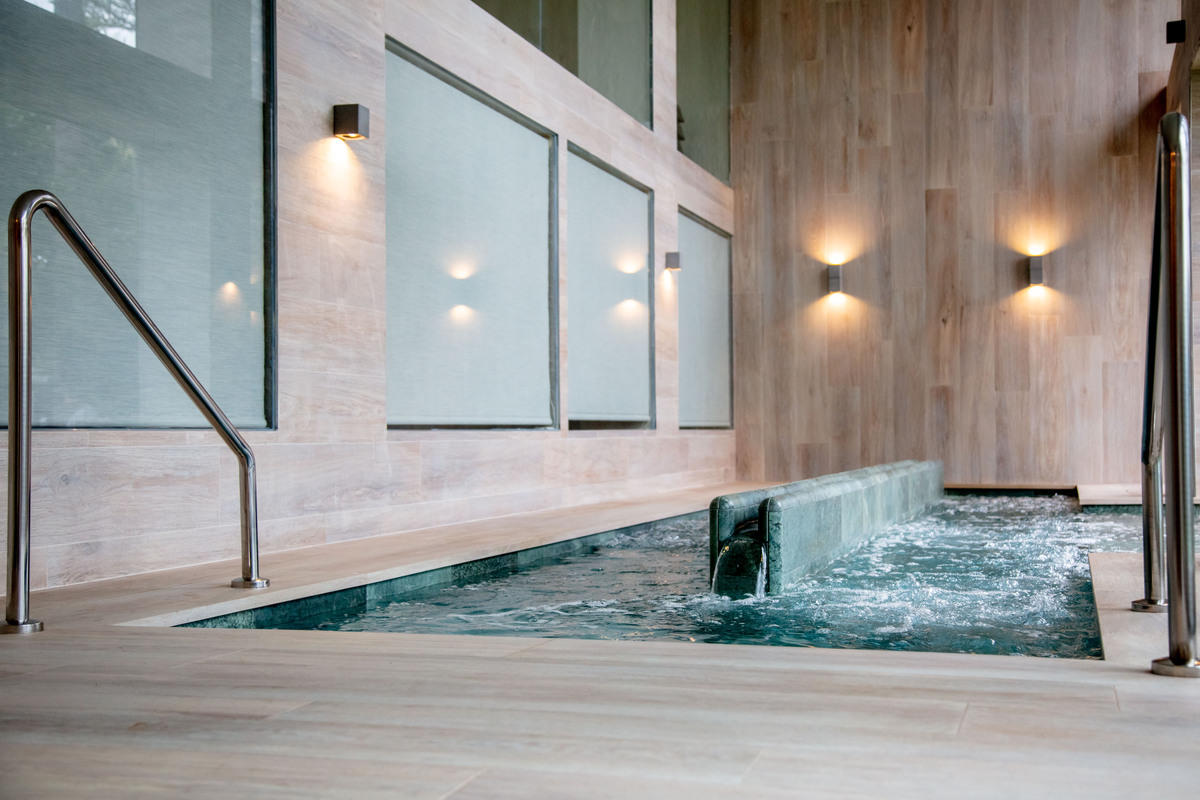
Warm seawater, gentle movement and time away from habitual demands can create an environment in which rest becomes possible again.
The experience may help a person slow down enough to notice what has been overlooked: fatigue, tension, grief or the simple need to be cared for.
At the Palasiet Thalasso Clinic, thalassotherapy is not viewed as an isolated treatment. It forms part of a broader and more personalised understanding of health.
Warm seawater, movement and deeper rest
Many women arrive at Palasiet after spending months, sometimes years, attending to everyone except themselves.
The first change is not always dramatic.
It may be the feeling of the shoulders softening in warm seawater. It may be completing a movement session without competition or judgement. It may be sleeping for a little longer because the day has finally followed a gentler rhythm.
There is no need to present these experiences as a cure.
Their value is human. They provide space for physical ease, attentive care and a different pace of living.
The Palasiet Method sees the whole person
The Palasiet Method brings together five connected pillars: thalassotherapy, physical activity, specialised medical care, nutrition and emotional wellbeing.
Nothing is considered entirely on its own.
For a woman experiencing perimenopause, persistent fatigue or prolonged stress, this means looking beyond a single symptom or laboratory value.
We consider sleep, medical history, daily habits, physical condition, nutrition, emotional wellbeing and what the person hopes to recover.
Our personalised menopause programme begins with a professional assessment and brings together medical guidance, nutrition, movement, emotional care and thalassotherapy according to each woman’s needs.
Sometimes the goal is better sleep. Sometimes it is renewed confidence in the body. For another woman, it may simply be the chance to pause long enough to understand what she needs next.
There is no standard version of balance because there is no standard woman.
When to speak to a health professional
Stress may contribute to how you feel, but new or persistent symptoms should not automatically be attributed to it.
Speak to a GP or qualified health professional when:
- Your periods become persistently irregular
- Your usual menstrual pattern changes unexpectedly
- Bleeding is unusually heavy or prolonged
- You bleed between periods
- Menopause symptoms affect your work, sleep or daily life
- You experience significant pelvic pain
- Pregnancy may be possible
- Your periods stop unexpectedly before the age of 45
- Low mood, anxiety or exhaustion become difficult to manage
- You are concerned about any new symptom
Any vaginal bleeding after menopause should be checked by a GP, even if it happens only once or involves a small amount of spotting.
Professional assessment is not an admission that something is seriously wrong. It is the safest way to understand what your body is communicating and discuss the care or treatment that may be appropriate.
Finding your way back to balance
Balance is often presented as a destination, a point at which the body behaves perfectly and life becomes calm.
That is rarely how real wellbeing feels.
Balance is more often the ability to recognise when something has shifted and to respond with attention rather than criticism.
It is eating before you become depleted. Resting before exhaustion becomes your normal state. Asking for help before you feel you have earned it.
Your body is not working against you when it responds to prolonged pressure. It may be asking for a different rhythm, more support or a closer look at symptoms that have been pushed aside.
At Palasiet, we believe that genuine wellbeing begins with understanding the person as a whole. Medical knowledge matters. So do movement, nourishment, emotional care and the restorative presence of the sea.
The way back does not need to be forceful.
Sometimes, it begins with being listened to.
Frequently asked questions
Can stress cause hormonal imbalance in women?
Prolonged stress can interact with systems involved in sleep, menstrual function, appetite, mood and energy. However, “hormonal imbalance” is a broad expression rather than a specific diagnosis. Similar symptoms can have several causes, so persistent or significant changes should be discussed with a qualified health professional.
Can stress delay or stop a period?
Stress and anxiety can contribute to irregular or missed periods. Other possible causes include pregnancy, contraception, weight changes, excessive exercise, PCOS, thyroid conditions and perimenopause. Speak to a GP if your usual pattern changes or remains irregular.
Which hormones are involved in stress?
Adrenaline and cortisol are two of the main hormones involved in the body’s stress response. They help prepare the body to respond to pressure or perceived danger. Hormonal systems are interconnected, but the effect of prolonged stress differs from one person to another.
Does stress make perimenopause feel worse?
Stress may make sleep disruption, anxiety, low mood and fatigue feel more difficult to manage. At the same time, perimenopausal symptoms can increase emotional and physical strain. This can create a cycle in which each experience appears to intensify the other.
What does hormonal stress mean?
“Hormonal stress” is an informal expression, not a recognised medical diagnosis. It is often used to describe the relationship between the stress response and symptoms connected with menstruation, fertility, perimenopause or menopause.
Can thalassotherapy balance hormones?
Thalassotherapy should not be described as a treatment that directly corrects hormone levels. As part of a personalised wellbeing programme, it can offer a supportive setting for rest, movement in warm seawater, physical relaxation and time away from daily demands.
When should I speak to a doctor?
Seek medical advice when symptoms are new, persistent, severe or affecting daily life. You should also speak to a GP about unexpected menstrual changes, bleeding between periods, periods stopping before the age of 45 or any vaginal bleeding after menopause.
Medical note: This article provides general health and wellbeing information. It is not a substitute for individual medical advice, diagnosis or treatment.